Karol G: Von SuperBowl-Überraschungsgast zur Coachella-Headlinerin

Die kolumbianische Sängerin Karol G gilt als die erste Latina-Sängerin, die als Headlinerin beim Festival Coachella auftritt. 

INDIO, KALIFORNIEN – 12. April 2026: Karol G performs auf der Coachella Bühne während des 2026 Coachella Valley Music and Arts Festival | Foto: Kevin Mazur/Getty Images for Coachella

Coachella-Geschichte: Beyoncé

2018 hatte Beyoncé einen Coachella-Auftritt, der in die Geschichtsbücher einging. Sie war die erste Schwarze Sängerin, die als Headlinerin auf der Coachella-Bühne auftritt und fegte dabei die ganze Welt von den Füßen. Mit ihren energiereichen Tänzen, Bezügen zu HBCUs und anderen Elementen afroamerikanischen Lebens in ihrem Beychella-Auftritt wird sie immer in Erinnerung bleiben. 

Karol G als La Bichota

Mit Karol G zog auch wieder die spanische Sprache auf die Coachella-Bühne ein. Seit ihrer Single La Bichota nennt sie sich teilweise selbst auch so. Im Gespräch mit Jimmy Fallon bei The Tonight Show erklärte sie, dass sie den Begriff Bichota vom puertoricanischen Wort Bichote (für Drogenboss) abgeleitet hatte. Über ihre Version des Begriffs Bichota sagte sie: „For me, the word is powerful, […], the meaning is like boss bitch girl, powerful, great, amazing, doing her thing by herself”.

“Si antes te hubiera conocido”

Eines der Lieder, mit dem sie beim diesjährigen Coachella-Festival auftrat, war das Lied „Si antes te hubiera conocido“. Das Lied stammt aus ihrem Album Tropicoqueta (2025). In dem Lied geht es um die Frage, was gewesen wäre, wenn das lyrische-Ich das lyrische-Du früher kennengelernt hätte. „

¿Qué hubiera sido? ¿Si antes te hubiera conocido? – Karol G.

Grammatiklektion zu Coachella-Lied

Auch aus grammatischer Sicht ist dies eine interessante Frage! In beiden Satzteilen des Satzes „¿Qué hubiera sido si antes te hubiera conocido?“ verwendet sie die Verben im Pretérito Pluscuamperfecto del Subjuntivo. Dieser wird mit der Imperfecto del Subjuntivo-Form des Verbs haber und dem Partizip des Verbs, um das es geht, gebildet. Dies ist ein Beispiel für einen Konditionalsatz mit dem Konnektor si. Die Situation ist bereits abgeschlossen und kann nicht mehr geändert werden; es geht um eine Bedingung, die nicht mehr eintreten kann. Grammatikbücher mögen es lieber, wenn im Hauptsatz das Condicional II verwendet würde, z.B.: „¿Qué habría sido (Condicional II) si antes te hubiera conocido (Pretérito Pluscuamperfecto del Subjuntivo)?“, letztendlich sind Bedingungssätze mit beiden Satzteilen mit Verben im Pretérito Pluscuamperfecto del Subjuntivo aber auch Teil der spanischen Sprache. 

Aufgabe:

  • Wähle eine Person aus deinem Leben aus. Was wäre deine Antwort auf die Frage ¿Qué hubiera sido si antes te hubiera conocido? Beginne den Satz mit „Si antes te hubiera conocido…“

Latinx-Musik auf den kalifornischen Weltbühnen

Nach der großen SuperBowl Halftime Show mit Bad Bunny, der als erster Sänger seinen Auftritt beinahe komplett auf Spanisch gestaltet hatte, kam nun also Karol G als erste Latina-Sängerin beim Coachella Festival. Übrigens, Karol G war bei Bad Bunnys Auftritt auch als Überraschungsgast dabei! 

Links:

Bad Bunny: Puerto Rico auf der Weltbühne

“English is not my first language. But it’s okay, it’s not America’s first language either”, sagte Bad Bunny in einem Interview im Vorlauf zu seinem SuperBowl-Halftime-Show-Auftritt 2026. Der Puertoricanische Sänger hatte sein SuperBowl-Halftime-Show-Debüt 2020, als Shakira und Jennifer Lopez die Leadsängerinnen der Show waren. Shakira hatte Bad Bunny damals mit auf die Bühne gebracht. 2026 war nun das Jahr gekommen, in dem Bad Bunny selbst der große Star des Auftritts war. In seiner Halftime-Show am 8.2.26 sang er auf Spanisch. In seinen Texten und in den Inszenierungen auf Football-Feld und Bühne hatte er einige Referenzen zu seiner Heimat Puerto Rico, dessen Gesellschaft und Geschichte, untergebracht.

Reflexion: Was weißt du über Puerto Rico? Findest du Referenzen zu Puerto Rico in dem Halftime-Show-Auftritt von Bad Bunny?

Bad Bunny auf einem Strommast als Teil der SuperBowl-Bühne während seines Auftritts
SANTA CLARA, Kalifornien – 8. Februar 2026: Bad Bunny bei der Apple Music Super Bowl LX Halftime Show | Foto: Ishika Samant/Getty Images

“God bless America”

Im letzten Abschnitt des Auftritts ruft Bad Bunny “God bless America” (Minute 12:09) und zählt daraufhin einige Länder auf, die zu den Americas gehören. Es gab Theorien, dass er die Länder Lateinamerikas aufgezählt hätte oder alle Länder der amerikanischen Kontinente, oder dass er alle lateinamerikanischen Länder auf Spanisch aufgezählt hätte und nur die USA dementsprechend auf Englisch. Es gab positive Reaktionen aus Kanada dazu, dass er “Canadá” auf Spanisch aufgezählt hatte. Tatsächlich hatte er einfach beinahe alle Länder der Americas aufgezählt, unabhängig davon, ob sie Teil von Lateinamerika waren oder nicht.

Übungen:

  1. Welche Länder erwähnt Bad Bunny in seinem Auftritt nachdem er “God bless America” ruft? Welche Länder der Americas fehlen?
  2. In welchen Ländern Lateinamerikas wird Spanisch gesprochen?
  3. Welche Länder erwähnt Bad Bunny, die Spanisch nicht als offizielle Sprache haben?
  4. Extra: Was ist das Problem an der Annahme, dass die Beschreibungen “Länder, in denen Spanisch gesprochen wird” und “Länder, in denen Spanisch die offizielle Sprache ist” deckungsgleich wären?

Youtube-Video zum Auftritt von Bad Bunny bei der Halftime-Show 2026

Tipp: Für den Fall, dass du Schwierigkeiten hast, bei dem schnellen Tempo mitzukommen, kannst du die Wiedergabegeschwindigkeit des Videos ändern. Du kannst auf Youtube, wenn dir ein Video angezeigt wird, auf das Zahnrad klicken und hier z.B. auf “0,7x” gehen. So behältst du die Qualität des Audios, aber es wird schon deutlich langsamer gesprochen und gesungen.

Geographie-Lektion to go

.Mit diesem Abschnitt des Auftritts schickte Bad Bunny folgende Message in die Welt: Amerika, das sind alle Länder der Americas, nicht nur die USA. Diese Geographie-Lektion scheinen einige Personen auch notwendig zu haben. Im Vorfeld hatten sich US-Amerikaner*innen (berühmt und weniger berühmt) öffentlich dazu geäußert, dass sie es vorgezogen hätten, wenn ein Amerikaner die Show übernommen hätte. Selbst wenn sie US-Amerikaner gesagt hätten, wäre die Aussage nicht weniger unpassend. Puerto Rico ist Teil der USA. Als Puertoricaner hat Bad Bunny einen US-amerikanischen Pass. Außerdem, wie Bad Bunny in der Show zeigte: Amerika, das ist eine wesentlich größere Region als nur die USA. Was einige dieser Reaktionen auf den Auftritt zeigten: Rassismus schert sich nicht um Logik.

Meine Lieblingsfrage im Spanischunterricht: Zu welchem Land gehört Puerto Rico?

Aufgabe: Schau dir eine Karte der Karibik an. Wo befinden sich Kuba, die Dominikanische Republik und Puerto Rico? Wie groß sind die Entfernungen zwischen Miami in Florida und Kuba, der Dominikanischen Republik und Puerto Rico jeweils?

Welttournee ohne Festland der USA

Nach dem SuperBowl-Auftritt führte Bad Bunny seine Welttournee weiter fort. Kurios dabei: Nach einigen Auftritten in Puerto Rico ging es für den Sänger um die Welt, jedoch blieben weitere Auftritte auf dem Festland der USA aus. Als Grund wurde die Gefahr genannt, dass ICE-Agenten vor den Konzerten warten könnten und Konzertbesucher*innen so weder in Sicherheit zum Konzert kämen und noch dieses wieder in Sicherheit verlassen könnten.

Kurz vor dem SuperBowl-Auftritt hatte Bad Bunny den ersten Grammy als “Album des Jahres” mit einem Album gewonnen, das nicht englischsprachig war, nämlich mit seinem Album “Debí Tirar Más Fotos”. Bad Bunny zeigt, dass man auch erfolgreich sein kann, wenn man nicht das englischsprachige Publikum mit englischsprachiger Musik auf dem Festland der USA bedient. Die Überraschung mancher Kommentator*innen klingt beinahe so, als wäre Spanisch keine Weltsprache, gesprochen von mindestens 500 Millionen Sprecher*innen weltweit. Eine andere Frage wäre auch: Seit wann muss man den Text von Musik verstehen, um sie sich anzuhören und sie zu mögen?

Next talk at: Polyglot Gathering 2026!

Spiele lassen sich bestens mit dem Sprachenlernen kombinieren, so auch Schach! Foto: Martina Gerdts

Mein nächster Vortrag verbindet meine beiden Leidenschaften: Sprachenlernen und Schach. Der Vortrag mit dem Titel “Turning your hobby into a language learning opportunity: Ajedrez en inglés, español y alemán” findet am 5. März 2026 um 12 Uhr im Rahmen des Polyglot Gathering 2026 statt. In diesem Vortrag werde ich auf Spanisch, Englisch und Deutsch darüber reden, wie man ein Hobby wie Schach als Möglichkeitengeber nutzen kann, um das eigene Sprachenlernen anzutreiben.

Zur Anmeldung zum Vortrag und zur Konferenz, bitte auf die Seite der Veranstaltung wechseln. Weitere Informationen und Material werde ich auf meiner Übersichtsseite zum Vortrag teilen.

Sprachunterricht: Mit Portugiesisch und Spanisch durch den Sommer

Hast du Lust auf Portugiesisch- oder Spanischunterricht im Sommer?

Du möchtest im Restaurant authentisch Essen bestellen können? Es geht dir um die Begriffe für Sightseeing-Touren? Du möchtest mit deinen Schwiegereltern über eure Familienmitglieder sprechen können? Du möchtest mit deinen Enkelkindern Kinderlieder singen können? Du möchtest dich für den nächsten Job oder das Stipendium auf Portugiesisch oder Spanisch bewerben können?

Vielleicht hast du auch schon einiges z.B. im Spanischunterricht an der Schule gelernt, aber das Ganze ist mittlerweile doch auch schon ein paar Tage (oder Jahrzehnte) her und du möchtest deine Sprachkenntnisse nochmal auffrischen.

Abhängig von deinen Zielen und deinem bisherigen Sprachlevel, können wir über passende Inhalte für deinen Einzelunterricht sprechen!

Du kannst dabei unterwegs auf Madeira, auf deinem Balkon zuhause oder an deinem Schreibtisch im Arbeitszimmer sein. Du brauchst nur einen Platz zum Lernen, das Lernmaterial, ein Gerät für Videokonferenzen und Internetzugang.

Community building worldwide: Online language classes can connect the world

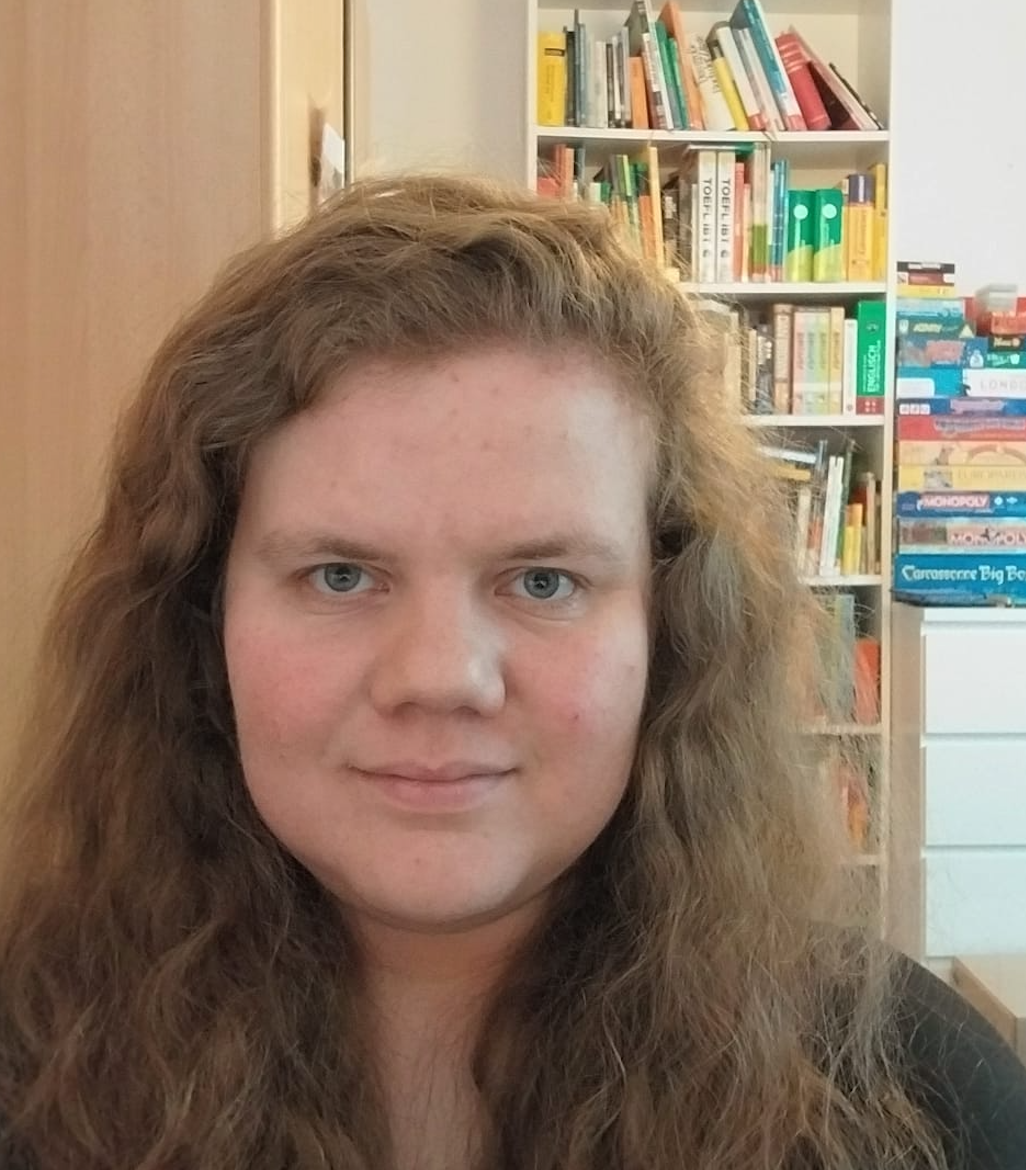
Martina Gerdts with a chess board in her hand in front of a camera for a video conference.

Image 1: Martina Gerdts and a chessboard in front of the camera. During my online classes, I mention a few things about myself – like my love for chess – and then ask my students to tell us a bit about themselves. What matters to you? What would you put in front of the camera?

Different ways of learning something new

Do you know what’s the biggest difference for me about learning chess with the Lichess app and languages with the Babbel app? …besides one being an open non-profit project based on volunteers and the other being a for-profit project of a for-profit company? Lichess includes community. There are chats, there are ways to share your own studies with friends, there are ways to share your thoughts with the world and to interact with each other. So, while I might be learning with study material on a screen, I am still able to connect to people. With the opportunity of sharing a link to a game with my coach, I can show my chess group some moves etc. 

Duolingo has some “community perks” like boards and some level of interaction and competition is possible. But I can’t even access every lesson when I want to work on it (correct me if that has changed at some point). With AI being more and more important for Duolingo, there are some additional questions to be discussed around … the environmental impact of the use of AI, the impact on language professionals and their jobs and the quality of material if it was generated by LLMs. Those questions have to be discussed in a wider setting and it’s obviously not just about Duolingo. I frequently get emails for workshops around the use of AI in language teaching and learning by lots of companies and institutions. At this point I know less and less language-related institutions that aren’t doing that.

The Babbel app is focusing on individual learning. You can share Babbel magazine articles with friends or podcast episodes, but you can’t share your lessons or vocabulary slides. That’s the thing with knowledge and education behind a paywall, of course. With Babbel for Business or having a friend group with several people doing the same units you might be nearest to something along the lines of learning in a community with the app itself. With Babbel Live, they created something that resulted in human interaction … in learning in a community directly. Why are we learning languages? Is it for human interaction? Or for communication with an AI robot for bank account customer support?

The community in Babbel Live was restricted to the classes. Interaction between classes wasn’t planned for. But during classes, there was real human interaction.

Babbel Live experiences from a teacher’s perspective

In my time as a Babbel Live German teacher, I was able to teach German learners all around the world. When students, especially beginners, weren’t yet ready to communicate everything in German or if they had questions, we made use of bridging languages. Most of the time, that was English but as not everyone speaks English and as everyone’s English levels vary, we have also used other bridging languages like Spanish, Portuguese, French and Italian. I used pictures from Internet searches, explained concepts in different languages or drew little images of things if German synonyms or explanations weren’t working anymore. During those classes, we were able to compare German words, phrases, grammar and pronunciation with the languages my students were already speaking: Farsi, Urdu, Hindi, Polish, Slovak, Mandarin Chinese, Arabic, Korean, Croatian, Greek, Albanian, Ukrainian, Romanian, Malay, Azerbaijani, Russian, Turkish … and many many more. 

Opportunities through online language classes

Online classes gave us the opportunity to connect people during COVID quarantine with each other; people who couldn’t travel for money reasons could get international interaction and connections to teachers on the other side of the planet; working people who have to do all the care work in their family could connect from home or from their lunch break. And let’s be honest, you can’t get a language teacher even for English, German, Italian, Spanish and French for A1 to C1 classes in any given city – let alone village. The same is true for language teaching gigs, by the way. 

The way of how people around the world are learning languages is changing: Babbel Live classes for private customers are closing

Publicly, the news made the rounds with a LinkedIn post by Markus Witte, Executive Chairman and Co-Founder of Babbel, according to his LinkedIn bio. Markus Witte wrote on Wednesday (May 21st, 2025) that the Babbel Live classes for private customers would close in the end of June. For the whole post, check out the LinkedIn statement by Markus Witte about the Babbel Live closing.

As I said before, Babbel is a for-profit company. They have to do what they have to do. Business decisions aren’t always related to all the things we want to matter. In a week when the government of the United States of America tries to forbid Harvard University to teach international students (see CNN article, “Federal judge halts Trump administration ban on Harvard’s ability to enroll international students”), it doesn’t feel like good news if an e-learning company like Babbel closes one of their offerings with more direct worldwide human interaction, however. There are other ways of learning languages and teaching languages with online classes. This product focused “only” on English, German, French, Spanish and Italian, so, it never was the answer for everything anyways. And at least their B2B language classes seem to stay. We’ll see what the future brings for that one.

Maybe I’m getting old, maybe I’m getting scared by national, international and world events … but connecting communities is quite a good thing, isn’t it? It looks like for-profit projects aren’t always the solution for everything. But let me end this article on a more positive note. In German, we say “Wo sich eine Tür schließt, da öffnet sich eine andere”, meaning when one opportunity is shutting down, another will rise. I’m not exactly subscribing to that expression … but the Internet, videoconference systems and language learning material keep existing, right? Let’s connect in other – maybe even more sustainable?- ways.

Martina Gerdts with her language learning material in the background

Image 2: Martina Gerdts with her language learning material in the background. You really just need a device, Internet connection, some communication software and language material to be able to learn or teach online.

From a more local Germany-based perspective

A more positive development that lets me look more optimistic into the future from at least a Germany-based perspective is that our local community schools for adult education, Volkshochschulen as they are called, are more and more open for online and hybrid online/in-person classes. This way, people from different villages or cities can more easily access classes that would take place in a city too far away, same for people who can’t leave their home for individual reasons, and same for teachers who wouldn’t get enough students at several schools but enough if those students come together in one online space.

Polish for the next chess trip? Maybe to the Polish Ekstraliga?A new article is out!

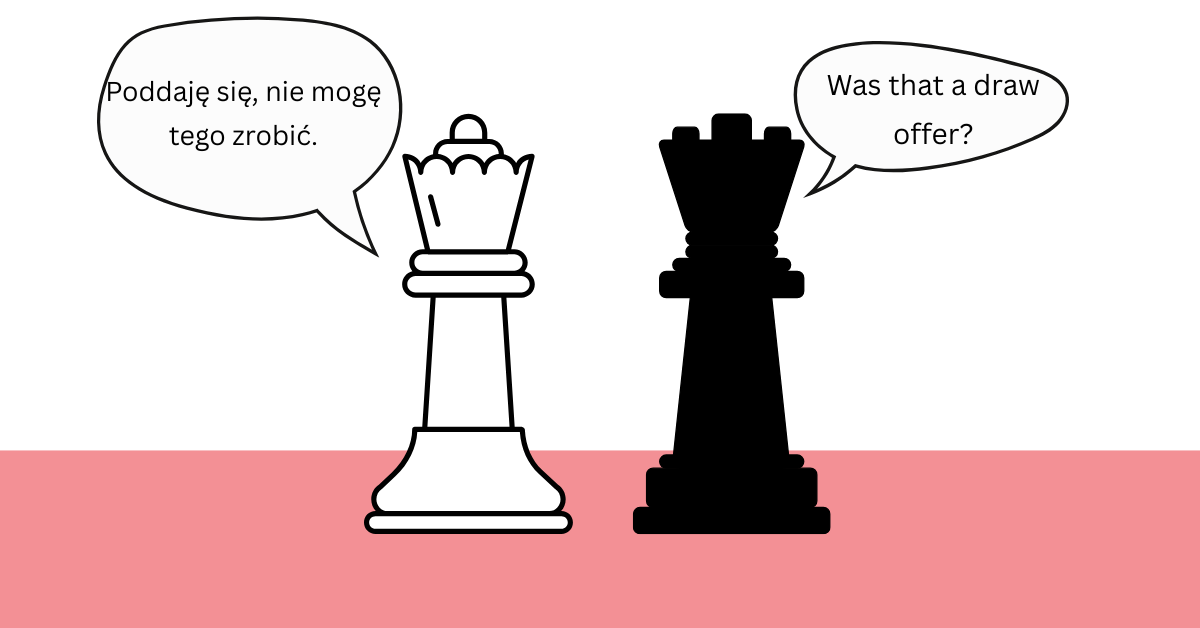
One chess piece says in Polish: "Poddaję się, nie mogę tego zrobić." and another chess piece says in English: "Was that a draw offer?"

Inspired by Grandmaster Rasmus Svane talking about his (and his brother GM Frederik Svane’s) upcoming chess trip to the Polish Ekstraliga, I’ve written an article about the language preparation for a trip like that. I’ve also discussed a few particularities of the pronunciation of the Polish language and why you can’t trust English written lists with Polish names about the correct writing. There is some geeking about phonology, links to Polish pronunciation resources and links to more info about the Polish Ekstraliga! GM Monika Soćko takes the stage in English and Polish as well!

Here is the article: Preparing for the Polish league Ekstraliga: Dipping into language learning.

The article builds on the content of a former Lichess article around language preparation for a chess event abroad. Last year, I wrote an article as preparation for a tournament in the Czech Republic: How to prepare for a chess tournament abroad … language-wise.

Learning chess with bilingual material: article and supplement material

A white pawn says in Spanish "¿Tablas? También me puedes dejar ganar." and a black rook says "Nooooo! Oh, ****! What am I doing?"

There is a new article about using bilingual material while learning endgames written by me. I have published the article “Learning about rook vs. pawn endgames: English/Spanish bilingual mode” on my Lichess blog. Part of the article is a little table of vocabulary that is necessary to understand a particular paragraph in the Spanish endgame book that I am citing in the article.

Here is a downloadable version of the vocabulary list:

Enjoy the learning process!

Flirting in your target language: Its very own can of worms

Two chess pieces (a white and a black knight) on a chess board forming a heart.
Heart of Knights, Photo: Martina Gerdts

Social Media brings some gems into the world. French teacher Anne from “Myfrenchatelier” on Instagram posted a few days ago about how to flirt with French energy (“Flirting in French”). That made me wonder: How do you flirt in a language you are still learning?

Dating 101 for language beginners

If you are just starting out to learn a language, it’s easy to get better in the realm of flirting. You start with introducing yourself and asking the other person about themselves. You learn to ask if you want to meet somewhere, and you start discussing activities for a meet up. You can create your very own “dating 101” words and phrases out of beginner material very fast.  

Task 1: What are typical activities for a date for you? How are those activities called in your target language?

Vocabulary around your own interests

After learning the basics, you can think about what else you might need. What about being able to state what you are looking for or how to say phrases you would use while flirting in your other language(s)? Material around how to say “I love you” or “you look pretty in that suit” might be of interest for you. 

ELE teacher Sol Tovar has created a page of material for Spanish learners with some words around San Valentín, check it out here: “Material ELE: San Valentín” (in Spanish).

Task 2: Think about some more phrases you would like to be able to say in your target language that might come handy for flirting situations.

But how do you flirt in ANY LANGUAGE?!

Flirting is a very individual thing. Everyone flirts a little different (if they are flirting at all). But we can have a look at some ways, how some people flirt:

  • Use humor (that translates so well in other languages *throws the irony sign at the statement*)
  • Behave like a nice and kind person (that could also just be a sign of a genuinely kind person doing what they do on a daily basis)
  • Give out compliments (you have to decide which compliments are appropriate in your context and which ones work best with a certain person; Does the person like compliments about their new jumper or do they prefer compliments about their work as an author or about their hobbies?)
  • Show an interest in the other person’s interests (Have you ever told an academic that you have read their thesis without having had to do so? This can work like magic!)

There are way more ways how people flirt. It’s also seen as flirting if someone does whatever they have to do to get some attention of their person of interest or even if they are insulting their person of interest. Please keep in mind that just because you don’t mean any harm, it doesn’t always mean you are not harming anyone. It goes similarly the other way around: Just because they say they don’t mean any harm; you can still feel hurt and disrespected. 

Task 3: Think about different ways of how people flirt and what feels most fitting for yourself. What kind of words and phrases do you need for that? 

Flirting or being genuinely nice or just chatter-loving, which one is this?

What’s read as flirting differs highly from person to person. There are cultural factors, factors of age, gender, social groups; former experiences play a role as much as many other things. Some people need an “I am flirting with you” (very on the nose) to realize what’s happening. 

Let’s take the Northern German cliché for a second. People say that it’s enough to greet people in Northern Germany with “Moin” (‘hello/ morning’) instead of saying “Moin moin” because the latter is seen as chattering. People also say “jo” (‘yes/ yeah’) can be a whole conversation in Northern Germany. Imagine how flirting with a person of very few words might look like in contrast to flirting with a chatter-loving person. But be aware, you could also run into a chatter-loving Northern German person! 😀

Well, yeah, I know. But how do I know then?

I’m sorry, that’s your task to figure out <3 

I’m just here to support your language learning progress. 🙂

Task 4: Take action! (And stay accountable with your actions!)


References:

Anne @myfrenchatelier, Instagram account, https://www.instagram.com/myfrenchatelier (Link last checked: May 17th, 2025).

Anne @myfrenchatelier: “Flirting in French”, Instagram post, https://www.instagram.com/p/DJR1YzDowLQ/?img_index=1 (Link last checked: May 17th, 2025).

Tovar, Sol (2020): “Material ELE: San Valentín”, in: Sol Tovar: Languages & Communication, https://www.soltov.ar/2020/09/material-ele-san-valentin.html (Link last checked: May 17th).

Ideen für (Menschenrechts-)Aktivismus mit Sprachskills

Wenn du Interesse an Sprachen hast und gerne mit Sprachen arbeitest, dann hattest du bestimmt schon Gedanken, deine Fähigkeiten für Gutes anzuwenden oder du hast dies sogar schon in die Realität umgesetzt. Ein typischer Gedanke von angehenden Lehrkräften ist: „Ich möchte Leuten helfen, Sprachen zu lernen und damit ihre Ziele (in Beruf, Hobby, Leben) zu erreichen und ihr Leben einfacher zu machen.“

Aber wenn du etwas mit Sprachen machen möchtest, gibt es nicht nur Aufgaben als Lehrkraft. Im Prinzip gibt es Aufgaben in allen Bereichen, die in irgendeiner Weise international oder national/regional mit Menschen verschiedener Sprachen arbeiten, so auch im Aktivismus um Menschenrechte herum. Hier ein paar Beispiele:

Anwendung deiner Fähigkeiten

  • Kommunikation vereinfachen: Übersetzung von Informationen, Brücke zwischen Hilfesuchenden und Hilfsorganisationen, Interviews in Sprache Betroffener führen, um Kommunikation angenehmer zu machen und detailliertere Angaben zu bekommen
  • Informationen über Sprachgemeinschaften hinaus verteilen: Übersetzung von Material, Kommunikation in diversen Sprachen angepasst an die Sprachen der Zielgruppen, Verbreitung von Informationen in breitere Öffentlichkeit
  • Überzeugungsarbeit mit offiziellen Stellen in deren Sprachen stattfinden lassen: So wie es für Betroffene von Menschenrechtsverstößen oft einfacher ist, in ihren eigenen Sprachen zu kommunizieren, kann es auch vorteilhaft sein, mit offiziellen Stellen, die man von etwas überzeugen möchte, in deren Sprachen zu kommunizieren. 
  • Verbindung von Sprachskills mit anderen Fähigkeiten: Solltest du Wissen aus anderen Bereichen mitbringen, so z.B. im Bereich Medien oder solltest du Anwält*in sein oder mit Finanzen und Buchhaltung zurechtkommen, lässt sich dies auch mit Sprachskills für effektiven Aktivismus verbinden. Aktivist*innengruppen, die mit Geld hantieren müssen, aber die Landessprache und die Buchhaltung in der Region nicht so genau kennen, könnten von jemandem profitieren, die*r mit ihnen ordentlich sprechen und sich um die Buchhaltung für die Gruppe kümmern kann. Ähnliches gilt für Anwält*innen, die mit einem breiteren Feld von Mandant*innen direkt kommunizieren können und Medienpersonen, die ein diverseres Feld von Quellen durcharbeiten und in verschiedenen Sprachen veröffentlichen können.

Disclaimer: Vorüberlegungen und Vorbereitung bevor es losgehen soll

Überlege dir genau, welche Art von Sprachskills du tatsächlich hast und was du für welche Aufgaben können musst. Es gibt Gründe dafür, weshalb es aufwendige Ausbildungen/Studiengänge für Übersetzer*innen und Konferenzdolmetschende gibt. Der Wortschatz um Menschenrechtsverletzungen hat auch nicht viel damit zu tun, was im Sprachkurs für den Urlaub beim Bestellen von Essen besprochen wird. Solltest du noch auf deinem Weg sein, entsprechende Sprachskills aufzubauen, kannst du dir aber einen strategischen Plan überlegen, wie du die benötigten Fähigkeiten Schritt für Schritt aufbauen kannst. Die Arbeit mit potenziell traumatisierten Menschen und kritischen Themen wie Menschenrechte bringt auch eine andere Verantwortung mit sich als viele andere Aufgabenbereiche rund um Sprachen. Überlege dir genau, welche Art von Verantwortung du tatsächlich übernehmen kannst. Man sollte sich auch über Privilegien und das Potenzial für Diskriminierung und wie man diese vermeiden kann, auseinandersetzen.

Creative writing as a method to improve your language skills

If you look into a textbook for some language, you will most certainly find some made up dialogues and texts. The authors of the book used creative writing to provide you some (maybe even interesting) material to work with your chosen language. If you learn how to say your name, your job and your address, it might get a bit boring to say the same thing every time. Creative writing is a nice way to make things more interesting. If you are bored by talking about yourself all the time, try to think about what a vampire from London or a werewolf from New York would say. 

Improving your skills in a certain area of language

 There is the possibility that you want to improve your language skills in a certain area, lets say neopronouns. Maybe you don’t use neopronouns for yourself and no one you communicate on a regular basis with has people use neopronouns for them. Creative writing can help you to get into situations where neopronouns are needed. You could create a character or even several if not all who uses neopronouns. Our imagination is a great tool to get into situations that aren’t our reality to train certain things, like the use of neopronouns in this case. 

Another scenario: Lets imagine your hobby is chess and you wanted to improve your chess-related language. Besides talking and writing about your hobby in your chosen language, you could also make up some story playing in the world of chess. This way, you could make up scenarios that fit with your chess language aim. You could do the same for business language and other topics!

Use it for the Job Language Challenge 2025?

If you’ve reached this blog article, there is a good chance that you have reached or will reach the articles about the Job Language Challenge 2025 as well. If not, feel free to click on the link! Anyways, this language challenge includes tasks where you can write or talk about yourself. How about writing about a made up character instead? How would a CV from a vampire from London look like? How would an online job interview for a werewolf during full moon go? Or what would a person completely different to you write into a motivation letter to get the job of your dreams?